Long-Term Vision
Environmental Comapny
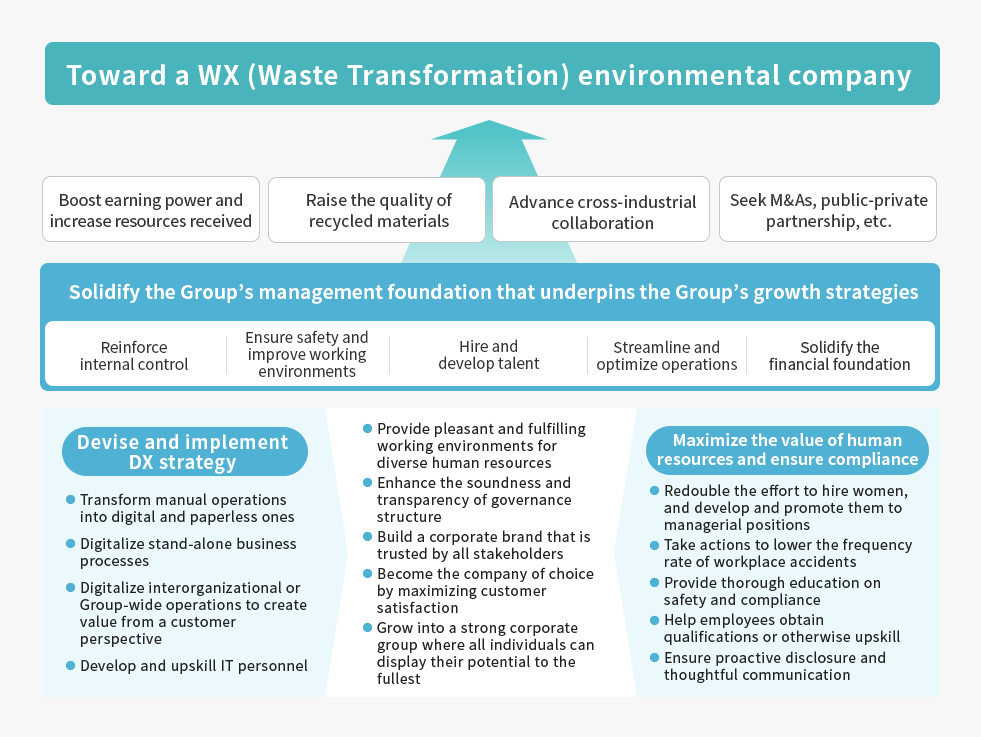
It is estimated that the market size of the environmental sector, including the waste treatment and recycling industry, will increase from approximately 50 trillion yen to 80 trillion yen by 2030.
TRE will revolutionize the resource cycle by overcoming the technological and economic challenges associated with waste materials that have conventionally been difficult to recycle into resources.
Accordingly, we will work together with a variety of partners, including flagship Japanese manufacturers, local companies, authorities, and trading companies on co-creation projects.
transformation (WX), the TRE Group expands its business domain
by striving both to make the existing businesses more
resilient and to venture into new businesses and fields.
In the medium to long term, it aspires
to grow into a recycling business group with net sales
of 300 billion yen by the 2040s.
Second Medium-Term Business Plan
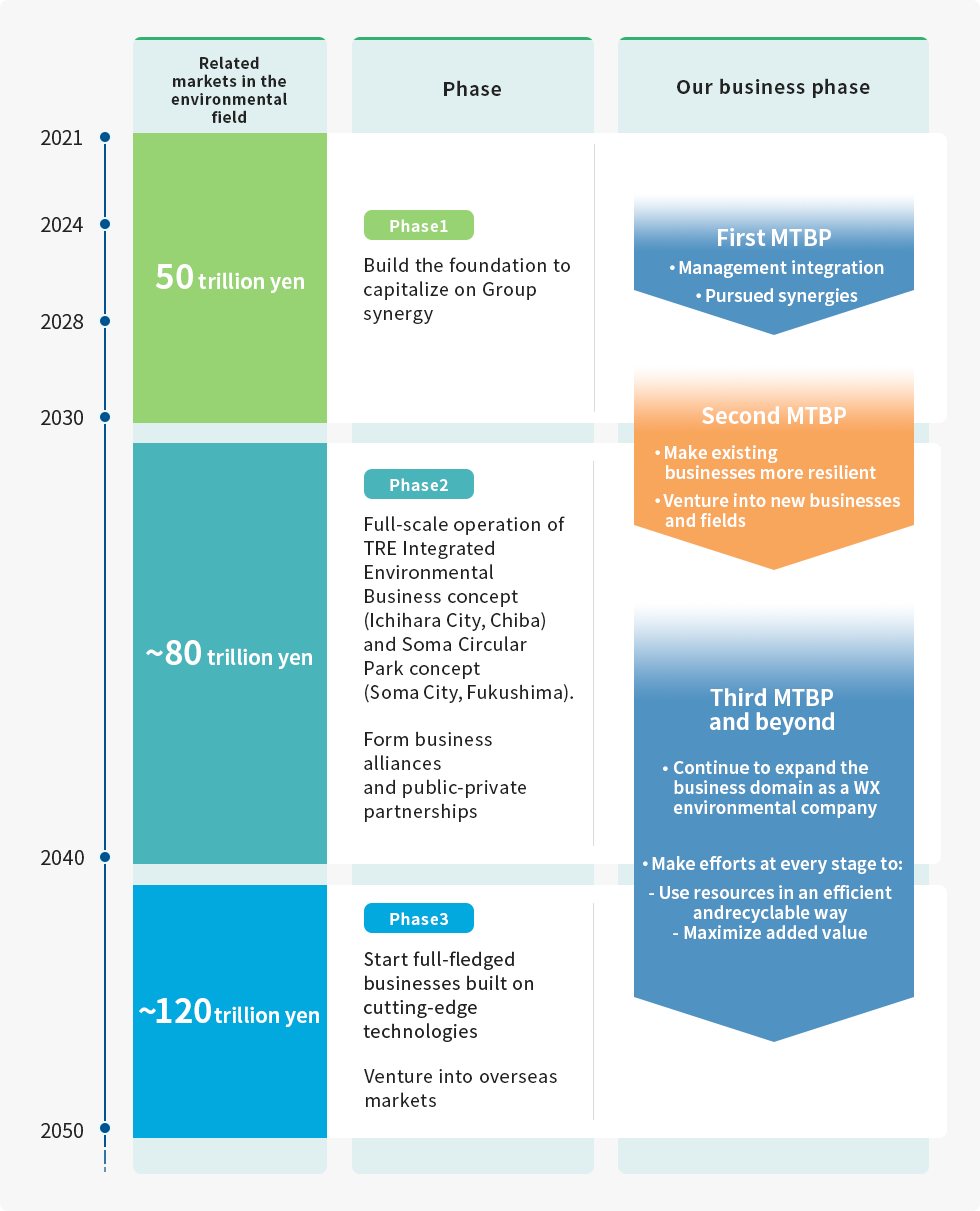
Key strategies
Growth
strategies
Widen operations by leveraging our
strengths as an enterprise
specializing in the environmental business
- Enhance the waste and resource recycling businesses that help realize an efficient-recycling society
- Promote the renewable energy business that helps create a carbon-neutral society
- Venture into new businesses and fields that contribute to the building of a circular economy society
Business
infrastructure
strategies
Solidify the Group’s management
foundation that
underpins the growth strategies
- Craft and execute DX strategy
- Reinforce internal control
- Improve safety management and working environments
- Invest in human capital and solidify the financial foundation
1. Enhance the waste and resource recycling businesses that
help
realize an efficient-recycling society
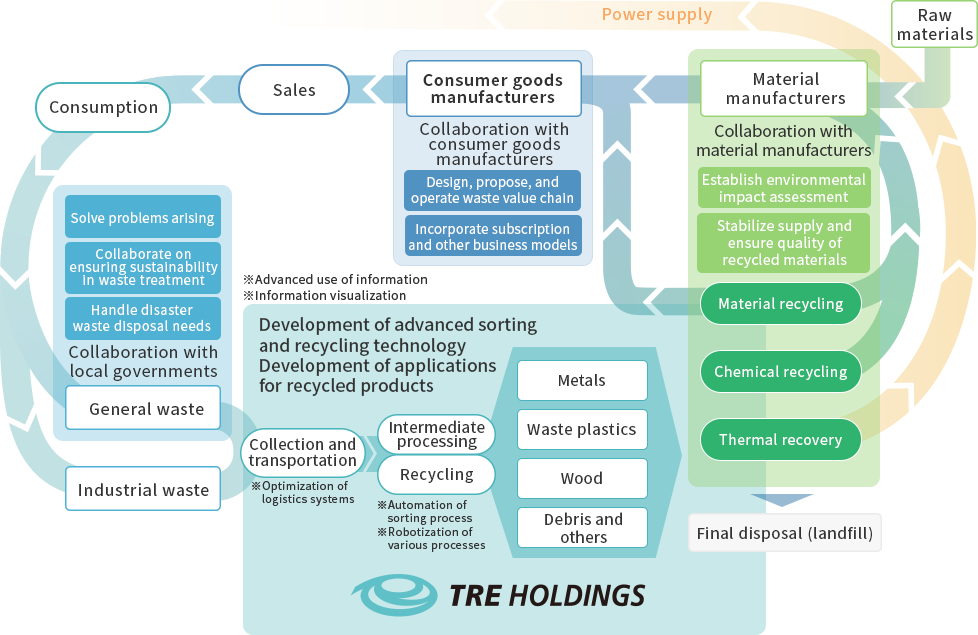
On top of the integrated waste treatment services that promise safety and
security,
we endeavor to widen operations to meet recycling and other societal needs.
We redouble the efforts to recycle resources and increase the volume handled.
○TRE Integrated Environmental Business Concept (Ichihara City, Chiba)
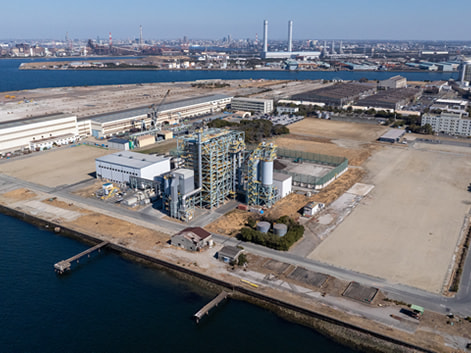
To meet growing societal demand for recycling of waste plastics and other materials amid the global trend toward the realization of an efficient recycling society and a carbon-neutral society, we have secured an expansive 84,000 m² site in Ichihara City, Chiba Prefecture. In combination with our adjacent existing facility that spans an area of 37,000 m², we plan to establish a comprehensive recycling operation encompassing (1) advanced sorting and recycling of waste plastics, (2) crushing and sorting, and recycling of industrial waste, (3)advanced sorting of metal resources, and (4) waste incineration and power generation.
Leveraging the recycling expertise that TAKEEI CORPORATION and REVER CORPORATION have accumulated over many years, we will collaborate with key Group plants in the area, local governments, manufacturers, and other parties to build an integrated network of waste treatment facilities equipped with advanced recycling technologies.
| Theme | Action | Earnings contribution in the fifth year |
|---|---|---|
|
|
|
|
|
Note: The figures above do not factor in the impact of full-scale reconstruction support projects in the areas affected by the 2024 Noto Peninsula Earthquake. |
|
|
|
|
|
|
2. Promote the renewable energy business
We enhance the power retail system and take the woody biomass power generation business
to the
next level.
| Theme | Action | Earnings contribution in the fifth year |
|---|---|---|
|
|
Note: compared to MTBP initial year target |
|
|
|
3. Venturing into new businesses and fields
1. Soma Circular Park Concept in Soma City, Fukushima
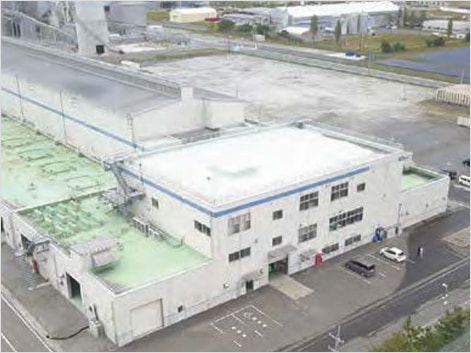
Soma Circular Park is TRE’s concept for a comprehensive recycling plant that further advances the recycling technologies the Group has fostered to date. Working in collaboration with Fukushima Prefecture’s Soma City and other neighboring municipalities, as well as private-sector companies and universities, we are striving to develop new technologies and businesses through co-creation, taking on the challenge of achieving local production of industrial resources for local consumption.
In order to help solve challenges facing local communities, we are promoting initiatives that utilize local resources, such as recycling plastics and solar panels, recovery of resources from incinerator ash, and hydrogen production, aiming to improve energy efficiency and reduce environmental impact.
2. Recycling Process Starting with End-of-Life Vehicles (ELVs)
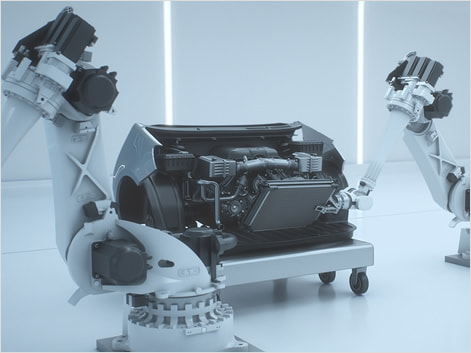
With Japan set to commence an incentive scheme*1 for recovery of recyclable resources from end-of-life vehicles (ELVs) in 2026, to meet the growing demand for recycling of plastics, glass, and automotive shredder residue (ASR dust), we are strengthening our recycling efforts and establishing re-sorting facilities. We are also promoting automotive recycling through co-creation efforts with a range of companies. These efforts include demonstration of automated sophisticated dismantling of ELVs*2 in partnership with manufacturers and other companies, as well as collaborations with chemical manufacturers on “car-to-car” recycling solutions.
A system designed to promote the recovery and recycling of materials from end-of-life vehicles (ELVs) by providing economic incentives to dismantlers who reduce ASR (shredder residue from ELVs) by recovering plastics and glass from ELVs.
"Demonstration of Manufacturing-and-Recycling Integrated Process for Horizontal Cycle Enabled by Automated Sophisticated Dismantling of ELVs (end-of-life vehicles)," selected as an industry-government-academia collaborative project aiming to expand the recycle content for automobile in the fiscal year 2023 supported by Ministry of the Environment, Japan.
3. Contributing to Building National Resilience
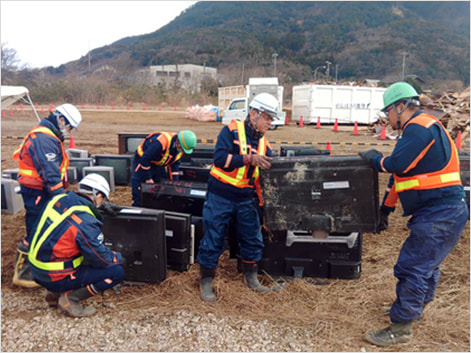
In recent years, Japan has faced increasingly frequent damage from natural disasters, including the Great East Japan Earthquake of 2011, typhoons Faxai and Hagibis in 2019, Fukushima offshore earthquakes in 2021 and 2022, and the 2024 Noto Peninsula Earthquake and Oku-Noto Heavy Rainfall. The TRE Group leverages its long-standing expertise in waste management to enhance Japan’s national resilience. We provide swift initial response during disasters and assist in disaster recovery and reconstruction efforts, including the treatment of disaster waste.
In our recent disaster waste treatment support projects, we have been striving to maximize resource recycling and ensure proper final disposal, in order to aid the swiftest possible recovery and reconstruction of disaster-affected areas.
4. Implementing New Recycling Technologies in Society
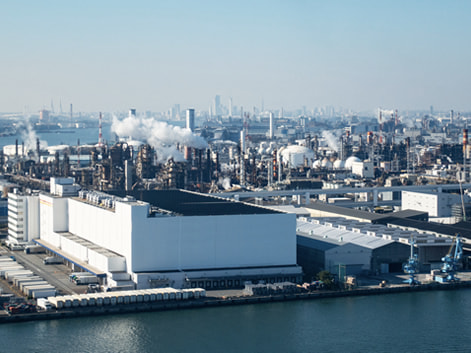
The TRE Group considers the utilization, recycling, and commercialization of waste materials as a resource as one of its priority tasks toward the creation of an efficient-recycling and carbon-neutral society. To this end, we allocate 1% of our sales revenue to research and development to actively pursue new technology development. At the Co-creation Research Center for WX, which we established together with Tohoku University, we are developing innovative waste treatment processes that utilize carbon capture and utilization (CCU) technology with the aim of implement ing CCU technologies on a societal level.
We are also conducting joint research with Yamagata University and Nihon University to commercialize recycled products based on carbon capture, utilization, and storage (CCUS) technology, and actively working to secure patents for this research output, such as CO2 fixation technology.
Management strategies